Our commitment

At Sancorganic, we understand sustainability as an intrinsic element of organic pistachio production. That is why we work to improve the environment in which we operate with concrete decisions regarding soil, water, and energy, along with a long-term vision.
Our approach


Living soil and biodiversity

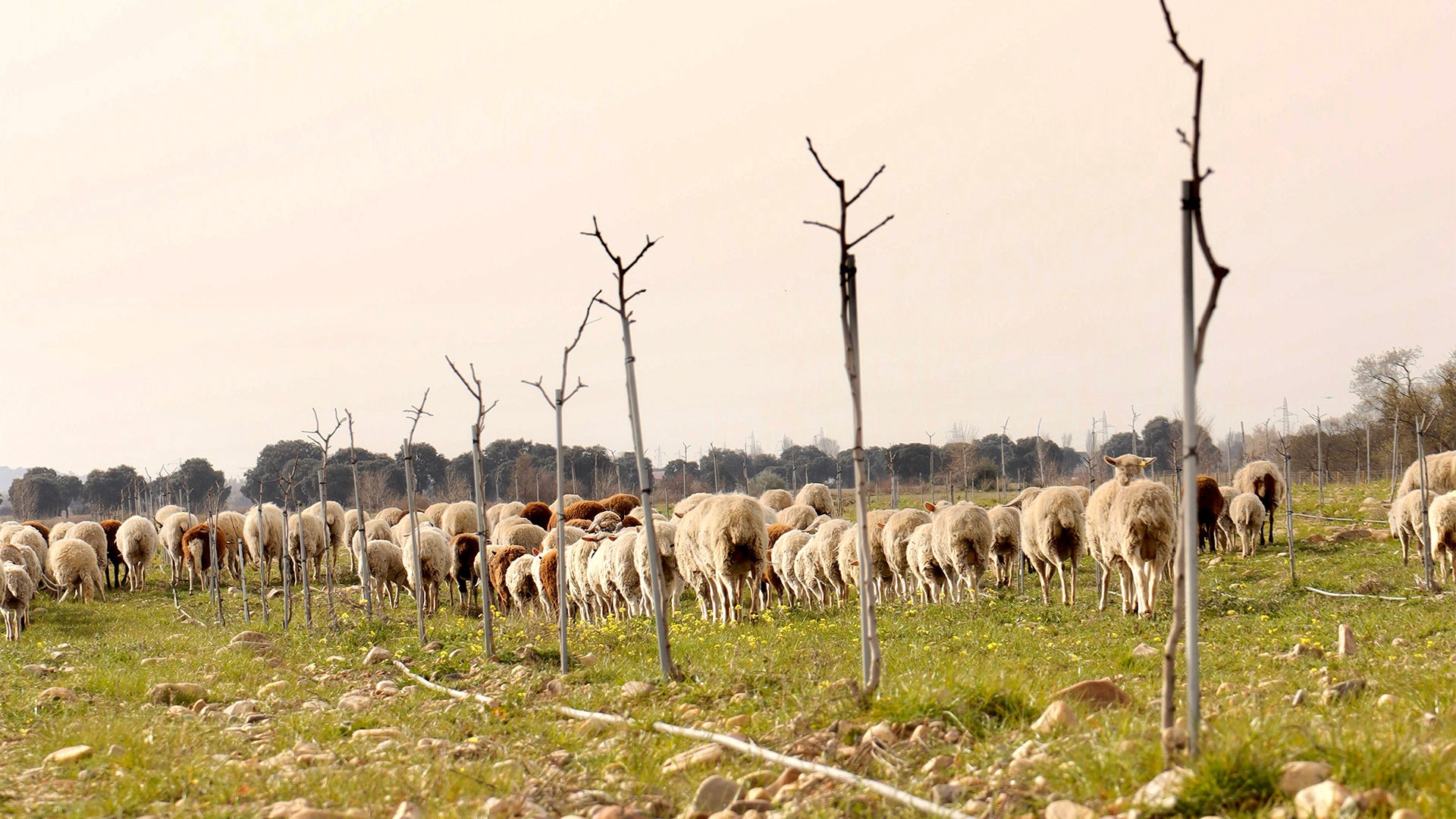
We planted a ground cover to reduce erosion, protect the tree, and improve fertility. With a flock of approximately 300 sheep, we control the vegetation and naturally fertilise the soil. Additionally, an independent certification company will measure the soil's evolution considering factors such as organic matter, biodiversity, and so on.

Living soil and biodiversity

We planted a ground cover to reduce erosion, protect the tree, and improve fertility. With a flock of approximately 300 sheep, we control the vegetation and naturally fertilise the soil. Additionally, an independent certification company will measure the soil's evolution considering factors such as organic matter, biodiversity, and so on.

Water, with precision

We use drip irrigation and sensor technology to monitor the soil moisture and adjust the water supply to meet the actual needs of the crop, thus optimising the use of this resource. We hold a concession from the Tajo River Hydrographic Confederation for the Jarama River and we are in the process of obtaining an additional concession to utilise several available wells on the estate.

Water, with precision

We use drip irrigation and sensor technology to monitor the soil moisture and adjust the water supply to meet the actual needs of the crop, thus optimising the use of this resource. We hold a concession from the Tajo River Hydrographic Confederation for the Jarama River and we are in the process of obtaining an additional concession to utilise several available wells on the estate.

Energy and autonomy

We have developed a self-consumption energy policy using solar panels and batteries, with the possibility of feeding excess energy back to the grid.

Energy and autonomy

We have developed a self-consumption energy policy using solar panels and batteries, with the possibility of feeding excess energy back to the grid.

Conscious cycle

The positive impact is the natural consequence of how we produce
Territory and institutional relationship

Living in harmony with the environment

We understand our farms as an essential element of the territories in which they are established.

Institutional development

Collaboration and coordination with the administrations and regulatory bodies of our activity is fundamental to us. That is why we maintain ongoing communication with the most relevant institutional actors, ensuring that we operate rigorously and aligned with the territory. 

Among others, we collaborate with: 

  • Tajo Hydrographic Confederation; Ministry for Ecological Transition and the Demographic Challenge

  • National Heritage; Ministry of the Presidency, Justice and Relations with the Cortes

  • Nature Protection Service - Civil Guard (Seprona); Ministry of the Interior

  • Department of Environment, Agriculture and Interior; Community of Madrid 

  • Body of Forest Agents; Community of Madrid

  • Councillor for Agriculture, Livestock and Rural Development; Castilla and León

  • Municipalities of Cebreros and Valdetorres de Jarama

Measurement and improvement

Measurement and improvement

Measurement and improvement

What we measure and for what purpose

01

Soil

Improve fertility and reduce erosion.

02

Water

Optimize consumption and improve irrigation efficiency.

03

Biodiversity

Promote biological balance and resilience.

04

Energy

Reduce dependency and move towards self-consumption.
Transparency

Transparency

Our commitment is to work with data and continuous learning: to establish baselines, track progress, and adjust our practices to improve outcomes over time.

Our commitment is to work with data and continuous learning: to establish baselines, track progress, and adjust our practices to improve outcomes over time.

Learn about our commitment

If you want to learn about the practices we implement in the field, in the plant, and how we turn them into real improvements for the environment, write to us and we will tell you all about it.