21/04/2026
The use of new technologies in agriculture continues to gain ground in Spain, especially in expanding crops such as pistachios. The need to improve productive efficiency and ensure crop stability has driven the launch of initiatives combining innovation and agronomic management. Sancorganic is at the forefront of this progress, having launched a programme in collaboration with Agroptimum aimed at reinforcing pollination through the use of drones within a certified organic production model. The proposal integrates different agricultural practices with the aim of optimising crop yield without compromising its sustainability.
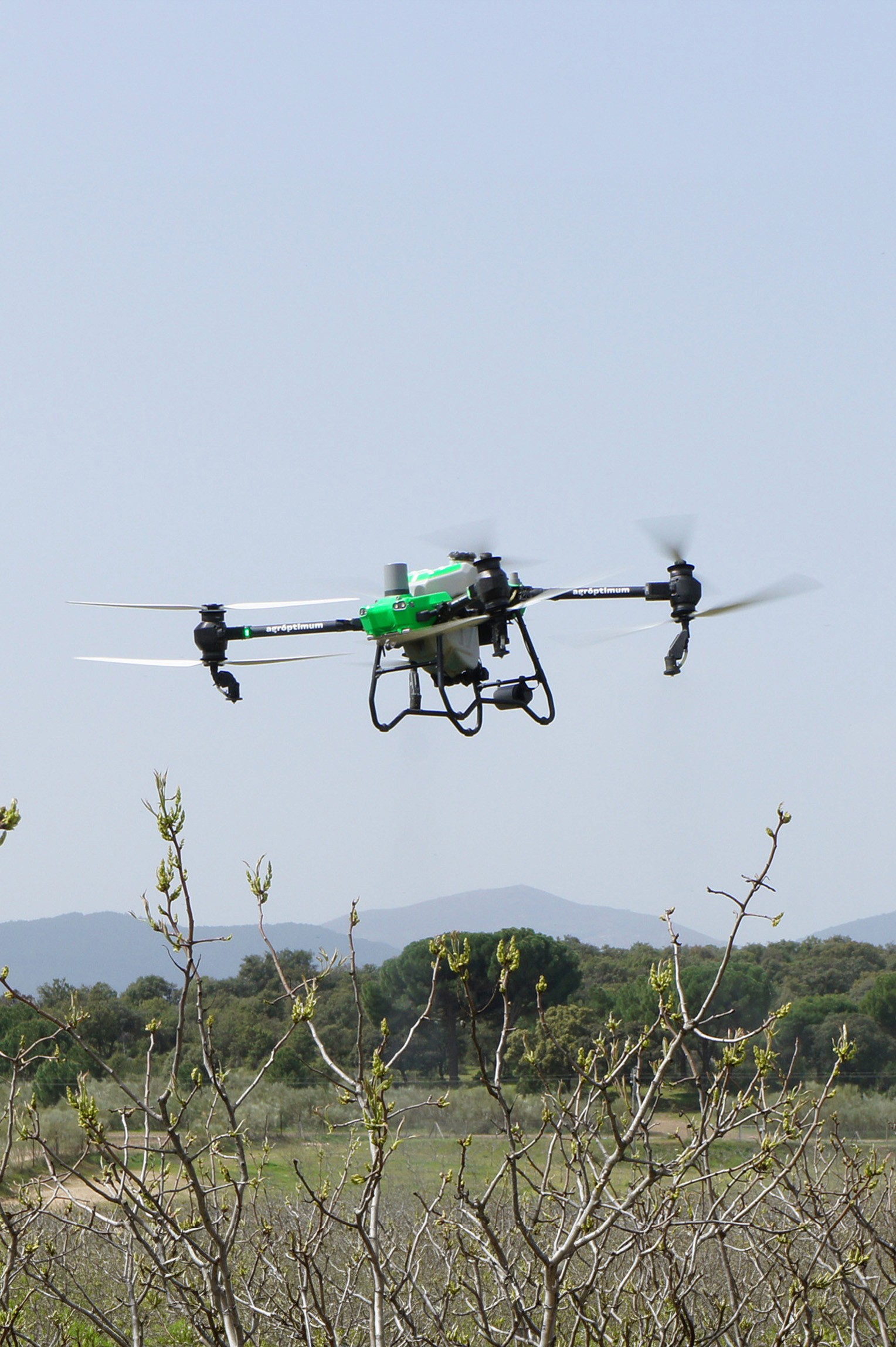
Drone technology at Sancorganic to reinforce pistachio pollination
The incorporation of drones in pistachio cultivation serves as a supporting tool at a critical stage of production development. Following several pilot trials, Sancorganic is already using this technology to release pollen in a controlled manner during the flowering period, allowing for improved distribution across large plantations. The intervention is tailored to specific moments in the crop cycle in order to increase the likelihood of fertilisation.
The pistachio pollination system requires proper plantation planning. The farms have approximately 8% male trees, although in Sancorganic's case this figure rises to 11% to promote the fertilisation of female specimens. The application of drones builds upon this agronomic foundation, providing precision in pollen dispersal and reinforcing the process under specific conditions.
The development of this technology is part of a broader strategy aimed at improving crop management. Field experience allows each intervention to be fine-tuned and the use of the drone to be adapted to the plantation's actual needs. Sancorganic continues to make progress in incorporating technical solutions that facilitate greater efficiency in agricultural management.
Organic crop and soil management to promote pollination
Improving pollination does not depend solely on technology, but also on the overall condition of the crop. The production model relies on agronomic management that begins with winter pruning, a practice that maintains the tree's balance and prepares it for the following season. Following this intervention, copper is applied by spraying to protect the branches and preserve their plant health status.
Furthermore, soil management is carried out using organic fertiliser, aiming to improve its structure and ensure balanced nutrition. These efforts, combined with the positive impact generated by the flock of more than 700 sheep grazing on the plantation grounds, create a fertile foundation that promotes root system development and contributes to more stable tree growth. This balance within Sancorganic directly influences the quality of flowering and the crop's ability to complete the pollination process more effectively.
Certified organic production is part of the system applied across all stages of cultivation. Trees of the Kerman variety grafted onto UCB1 rootstock are used, with planting layouts tailored to the characteristics of each farm. Technical planning allows for the optimisation of resources and maintains precise control over crop development.
Well-nourished soil and a balanced tree promote the development of higher-quality flowers, increasing the activity of natural pollinators and improving the results of assisted pollination. The combination of agronomic management and technology makes it possible to move towards a more efficient production model aligned with market demands.
The approach applied by Sancorganic strengthens the plantation, maintains ecosystem balance through the use of organic inputs, and improves yield per hectare through technical crop management. The integration of these practices within a single model helps consolidate an agricultural system geared towards quality, productive stability, and long-term sustainability.
